
Gut Health and Brain Function: Understanding the Gut-Brain Axis

Updated: Sep 9
Written by Dr. Charles Drew, Lead Pharmaceutical Content Specialist & Clinical Drug Information Reviewer
Reviewed for medical accuracy under the Ivermectinkart Editorial Policy
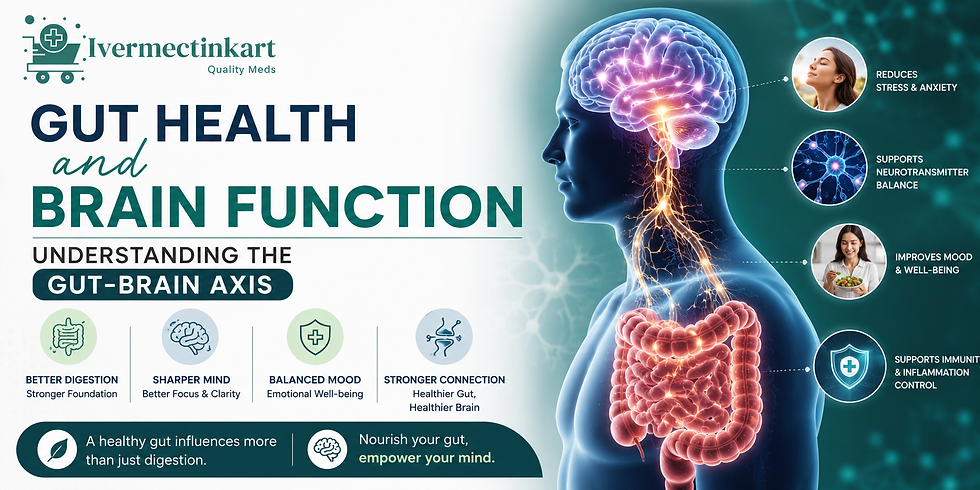
Gut Health and Brain Function are more closely connected than many people realize. Scientists have discovered that the digestive system and the brain communicate continuously through a network of nerves, hormones, and chemical messengers known as the gut-brain axis. This connection helps explain why digestive issues can sometimes affect mood, concentration, and emotional well-being.
In recent years, growing research has highlighted the importance of the gut microbiome—the trillions of bacteria and other microorganisms living in the digestive tract. These microbes play a role in digestion, immune function, and even the production of certain chemicals that influence brain activity.
Understanding the gut-brain axis can help people appreciate how diet, lifestyle, and digestive health may affect mental and emotional wellness. While research is still evolving, the evidence suggests that caring for gut health may also benefit brain function.
What Is the Gut-Brain Axis?
The gut-brain axis refers to the communication network that connects the digestive system and the brain. This system allows both organs to send and receive information continuously throughout the day.
Communication occurs through nerves, hormones, immune signals, and microbial metabolites. These pathways help regulate digestion, mood, appetite, stress responses, and other important functions.
Scientists now recognize the gut-brain axis as one of the body's most important communication systems because it influences both physical and mental health.
How the Gut and Brain Communicate
The gut and brain remain connected through several biological pathways. These pathways work together to ensure that information flows between the digestive system and the central nervous system.
Each communication route plays a unique role in maintaining overall health and balance within the body.
The Vagus Nerve
The vagus nerve is one of the primary communication channels between the gut and the brain. It carries signals in both directions and helps coordinate many bodily functions.
The vagus nerve supports:
Digestive activity
Heart rate regulation
Stress responses
Communication between organs
Brain-gut signaling
Hormonal Communication
Hormones help deliver messages throughout the body, including between the digestive system and the brain.
Important hormonal functions include:
Appetite regulation
Hunger signaling
Stress responses
Energy balance
Digestive control
Immune System Signaling
The immune system also contributes to gut-brain communication. A large portion of immune activity occurs within the digestive tract.
Immune-related communication involves:
Inflammatory responses
Immune regulation
Infection defense
Tissue protection
Cellular signaling
Understanding the Gut Microbiome
The gut microbiome consists of trillions of microorganisms that live primarily in the intestines. These include bacteria, fungi, viruses, and other microbes that contribute to health.
Many of these microorganisms perform beneficial functions. They help digest food, produce vitamins, support immunity, and influence metabolic processes.
Scientists increasingly recognize that the microbiome may also play a role in brain function and mental well-being through the gut-brain axis.
Beneficial Gut Bacteria
Certain bacteria help maintain a healthy digestive environment and support normal bodily functions.
Potential benefits include:
Improved digestion
Nutrient production
Immune support
Protection against harmful microbes
Balanced gut environment
Microbial Diversity
A diverse microbiome is often associated with better overall health. Diversity refers to the variety of microbial species present in the digestive system.
Factors that support diversity include:
Varied diet
Fiber intake
Regular exercise
Healthy lifestyle habits
Reduced unnecessary antibiotic use
The Role of Neurotransmitters in the Gut-Brain Axis
Neurotransmitters are chemical messengers that help nerve cells communicate. While they are often associated with the brain, some neurotransmitters are also produced in the digestive system.
Researchers have found that gut microbes may influence the production and regulation of certain neurotransmitters involved in mood and behavior.
This discovery has increased scientific interest in understanding how gut health may affect mental wellness.
Serotonin Production
Serotonin is often called the "feel-good" neurotransmitter because it helps regulate mood and emotional well-being.
Functions associated with serotonin include:
Mood regulation
Sleep support
Appetite control
Emotional balance
Digestive function
Other Brain-Related Chemicals
The gut environment may influence additional signaling molecules involved in brain activity.
Examples include:
Dopamine-related compounds
Short-chain fatty acids
Metabolic byproducts
Chemical messengers
How Gut Health May Influence Brain Function
Research suggests that changes in gut health may affect several aspects of brain function. Scientists continue investigating these relationships to better understand how the gut and brain interact.
Although more studies are needed, current findings indicate that gut health may influence emotional, cognitive, and behavioral processes.
Mood and Emotional Well-Being
Many researchers are exploring whether gut health contributes to emotional wellness and psychological resilience.
Potential areas of influence include:
Mood regulation
Stress management
Emotional balance
Psychological well-being
Social functioning
Memory and Cognitive Function
Scientists are also studying potential links between gut health and cognitive performance.
Areas being investigated include:
Memory processes
Learning ability
Concentration
Attention span
Information processing
The Relationship Between Stress and Gut Health
Stress affects more than mental health. It can also influence digestive function and alter the balance of microorganisms living in the gut.
When stress levels rise, communication between the gut and brain may become disrupted. This can contribute to digestive symptoms and emotional discomfort.
The relationship works in both directions, meaning gut disturbances may also affect stress responses.
Effects of Chronic Stress
Long-term stress can have widespread effects on overall health.
Possible effects include:
Digestive discomfort
Sleep disturbances
Mood changes
Reduced well-being
Altered eating habits
Stress Management Strategies
Managing stress may support both gut and brain health.
Helpful approaches include:
Regular exercise
Meditation
Deep breathing
Social support
Adequate sleep
Foods That Support Gut Health
Diet is one of the most important factors influencing the gut microbiome. The foods people eat can affect the composition and activity of gut microorganisms.
Choosing nutrient-rich foods may help create an environment that supports microbial diversity and digestive wellness.
High-Fiber Foods
Fiber serves as an important food source for beneficial gut bacteria.
Examples include:
Fruits
Vegetables
Whole grains
Legumes
Nuts and seeds
Fermented Foods
Fermented foods contain beneficial microorganisms that may support gut health.
Common examples include:
Yogurt
Kefir
Kimchi
Sauerkraut
Miso
Lifestyle Factors That Affect the Gut-Brain Axis
The gut-brain connection is influenced by more than diet alone. Daily lifestyle habits also play a significant role in maintaining healthy communication between the digestive system and the brain.
Several factors can either support or disrupt this relationship over time.
Lifestyle Factor | Potential Impact on Gut-Brain Health |
Balanced Diet | Supports microbial diversity |
Regular Exercise | Promotes overall wellness |
Quality Sleep | Supports brain and gut function |
Stress Management | Helps maintain healthy communication |
Hydration | Supports digestive processes |
Smoking Avoidance | Protects overall health |
Current Research on the Gut-Brain Axis
Interest in the gut-brain axis has grown rapidly over the past decade. Researchers continue exploring how microorganisms, dietary habits, and lifestyle factors influence brain function.
Studies are investigating potential links between gut health and conditions involving mood, cognition, and neurological function. However, many questions remain unanswered.
As research advances, scientists hope to better understand how gut-focused strategies may support overall health and well-being.
Practical Tips for Supporting Gut and Brain Health
Supporting the gut-brain axis does not necessarily require complicated interventions. Small lifestyle changes can often contribute to better digestive and overall wellness.
Consistency is usually more important than perfection when building healthy habits.
Daily Habits to Consider
Simple practices may help support both gut and brain function.
Helpful habits include:
Eating a balanced diet
Consuming fiber-rich foods
Staying physically active
Managing stress
Prioritizing sleep
Staying hydrated
Limiting highly processed foods
Maintaining regular meal patterns
Conclusion
The gut-brain axis highlights the remarkable connection between digestive health and brain function. Through nerves, hormones, immune signals, and the gut microbiome, the digestive system and brain continuously exchange information that influences many aspects of health.
Research suggests that gut health may affect mood, stress responses, cognitive performance, and overall well-being. Although scientists are still learning about many of these relationships, the evidence continues to support the importance of maintaining a healthy digestive system.
By focusing on nutritious foods, regular exercise, quality sleep, hydration, and stress management, individuals can take meaningful steps toward supporting both gut health and brain function.


FAQs
Q1. What is the gut-brain axis?
The gut-brain axis is the communication network that connects the digestive system and the brain through nerves, hormones, immune signals, and microbial activity.
Q2. Can gut health affect mood?
Research suggests that gut health may influence mood through interactions involving the gut microbiome and neurotransmitter-related pathways.
Q3. What is the gut microbiome?
The gut microbiome refers to the community of microorganisms living in the digestive tract that help support digestion, immunity, and other bodily functions.
Q4. Which foods support gut health?
Fiber-rich foods, fruits, vegetables, whole grains, legumes, and fermented foods are commonly associated with supporting gut health.
Q5. Does stress affect the gut?
Yes. Stress can influence digestion, alter gut microbial balance, and affect communication within the gut-brain axis.
Q6. How can I support both gut and brain health?
A balanced diet, regular exercise, quality sleep, stress management, hydration, and healthy lifestyle habits may help support both systems.


Comments