
Common Colon Problems: Symptoms, Causes & Treatment Options

Updated: Sep 17
Written by Dr. Charles Drew, Lead Pharmaceutical Content Specialist & Clinical Drug Information Reviewer
Reviewed for medical accuracy under the Ivermectinkart Editorial Policy
Introduction
Colon problems can range from temporary constipation to long-term conditions that require ongoing medical care. Because symptoms such as abdominal pain, bloating, diarrhea, constipation, and changes in bowel habits overlap across many conditions, symptoms alone cannot always tell you what is wrong. Common colon problems include constipation, diverticular disease, irritable bowel syndrome (IBS), inflammatory bowel diseases such as ulcerative colitis, and colorectal cancer. Some problems improve with dietary or lifestyle changes, while others require medicines, procedures, surgery, or long-term specialist care. Just as importantly, colorectal polyps and early colorectal cancer may cause no symptoms at all, which is why appropriate screening matters. This guide explains common symptoms, possible causes, treatment options, and warning signs that should prompt medical attention.
What Symptoms Can Colon Problems Cause?
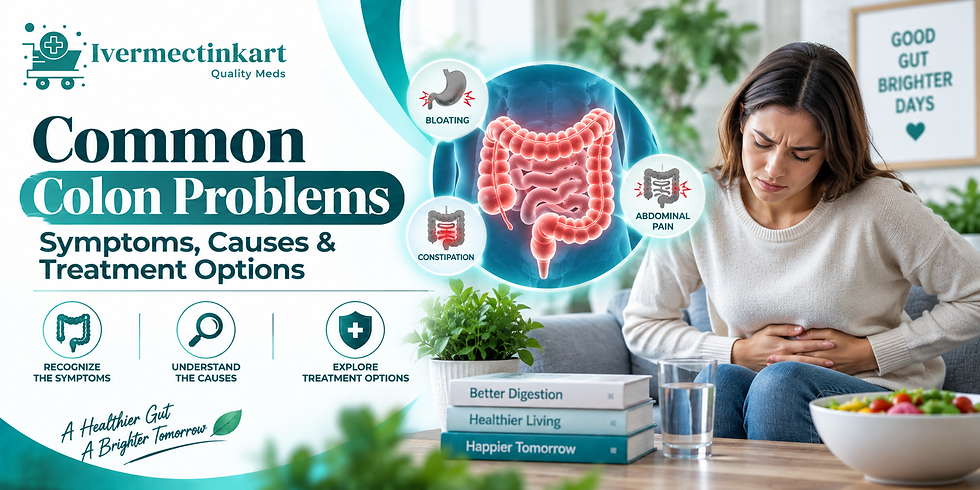
Colon problems can cause changes in bowel movements, abdominal discomfort, bloating, diarrhea, constipation, rectal bleeding, or blood in the stool. However, the same symptom can occur with several different conditions, so persistent or concerning changes deserve medical evaluation rather than self-diagnosis.
For example, constipation can occur because of inadequate fiber, dehydration, certain medications, reduced physical activity, or medical conditions. Abdominal pain and altered bowel habits may occur with IBS, while abdominal pain, diarrhea, and bleeding can occur with inflammatory bowel disease.
Common colon symptoms and conditions that may be associated with them
Symptom | Possible conditions or explanations | When to pay closer attention |
Constipation | Diet or fluid changes, medications, IBS, other medical conditions | Persistent constipation or constipation with bleeding or continuing pain |
Diarrhea | IBS, inflammatory bowel disease, infections, other digestive conditions | Persistent diarrhea, dehydration, bleeding, fever, or significant pain |
Abdominal pain or cramping | IBS, diverticular disease, ulcerative colitis, colorectal cancer, other causes | Severe, persistent, or worsening pain |
Bloating | IBS, diverticular disease, diet-related factors, other digestive problems | Persistent symptoms or symptoms accompanied by other concerning changes |
Blood in or on stool | Diverticular bleeding, inflammatory bowel disease, colorectal cancer, hemorrhoids, other causes | Medical evaluation is important |
Unexplained bowel-habit changes | Many possible causes | Especially important when persistent or accompanied by bleeding or weight loss |
Colon symptoms frequently overlap. A change in bowel habits does not automatically mean cancer, but persistent changes, bleeding, unexplained weight loss, or continuing abdominal pain should not simply be assumed to be IBS, hemorrhoids, diet, or aging.
How Does Constipation Affect the Colon?
Constipation generally involves fewer than three bowel movements a week, hard, dry, or lumpy stools, difficulty or pain when passing stool, or feeling that stool has not completely passed. It is common, but persistent constipation can have many different causes.
According to the NIDDK guidance on constipation symptoms and causes , contributing factors can include too little fiber, dehydration, inadequate physical activity, changes in routine, certain medicines, and medical conditions such as diabetes or hypothyroidism. Bowel obstruction and some anatomical problems can also cause constipation.
How is constipation treated?
Treatment depends on the cause. Increasing dietary fiber, drinking appropriate amounts of fluids, staying physically active, and developing a regular bowel routine can help some people.
Some people need over-the-counter or prescription treatments. For persistent constipation, clinicians may investigate underlying causes and, depending on the diagnosis, use prescription medicines or treatments such as biofeedback therapy. Surgery is reserved for selected underlying problems or severe cases.
Do not stop or change a prescription medicine simply because you suspect it is causing constipation. Discuss the problem with your doctor or pharmacist first.
What Are Diverticulosis and Diverticulitis?
Diverticulosis occurs when small pouches, called diverticula, form and push outward through weak areas in the colon wall. Many people may not know they have these pouches until they are found during testing for another reason.
Diverticulitis is different. It occurs when diverticula become inflamed and can cause abdominal pain that is often severe. Diverticular disease can also involve chronic symptoms or bleeding.
Possible symptoms include:
Lower abdominal pain or cramping
Bloating
Constipation
Diarrhea
Rectal bleeding
More severe abdominal pain with diverticulitis
These symptoms overlap with other digestive conditions, including IBS. Having abdominal pain or bloating therefore does not establish that diverticular disease is the cause.
How is diverticular disease treated?
Treatment depends on whether a person has uncomplicated diverticulosis, chronic symptoms, acute diverticulitis, bleeding, or another complication. Some people with chronic symptoms may be advised to increase fiber, while treatment for diverticulitis can involve temporary dietary changes, pain
management, and antibiotics in selected cases. Not everyone with uncomplicated diverticulitis requires antibiotics.
Severe diverticulitis or complications may require hospital treatment. Abscesses sometimes need drainage, and complications such as obstruction, perforation, fistulas, or peritonitis may require surgery.
Is Irritable Bowel Syndrome a Colon Disease?
Irritable bowel syndrome, or IBS, is a chronic digestive disorder characterized by repeated abdominal pain and changes in bowel movements. People may experience constipation, diarrhea, or both, but IBS does not cause visible damage to the digestive tract.
Common symptoms include abdominal pain associated with bowel movements, bloating, constipation, diarrhea, a feeling of incomplete emptying, and sometimes whitish mucus in the stool.
Doctors do not know exactly what causes IBS. Diagnosis generally involves looking at the pattern of symptoms, reviewing medical and family history, and performing an examination. Tests may sometimes be needed to rule out other conditions.
What treatments are available for IBS?
IBS treatment is individualized because symptoms and triggers vary considerably. Depending on the person's symptoms, treatment may involve dietary changes, lifestyle measures, medicines, and certain psychological therapies that target communication between the brain and digestive system.
Dietary approaches may include adjusting fiber or, under appropriate guidance, trying a low-FODMAP diet. Specific medicines differ for IBS with constipation and IBS with diarrhea.
IBS should not be self-diagnosed solely because you have bloating or irregular bowel movements. New or concerning symptoms need appropriate assessment.
What Is Inflammatory Bowel Disease?
Inflammatory bowel disease, or IBD, is different from IBS. IBD involves actual inflammation and includes conditions such as ulcerative colitis and Crohn's disease.
Ulcerative colitis specifically causes inflammation and ulcers in the inner lining of the large intestine.
Symptoms may include diarrhea, blood in the stool or rectal bleeding, abdominal pain and cramping, bowel urgency, mucus or pus in stool, and the persistent feeling that you need to have a bowel movement even when the bowel may be empty.
Experts do not know one single cause of ulcerative colitis. Evidence suggests that genes, abnormal immune reactions, the gut microbiome, and environmental factors may contribute.
How is ulcerative colitis treated?
Treatment aims to control inflammation, bring about remission—a period when symptoms disappear—and maintain remission. The NIDDK overview of ulcerative colitis treatment describes treatment options including aminosalicylates, corticosteroids, immunosuppressants, biologic therapies, certain small-molecule medicines, and surgery. Which option is appropriate depends on disease severity and how much of the large intestine is affected.
Severe ulcerative colitis may require hospital treatment. Surgery can also become necessary when medicines do not adequately control disease or when serious complications, precancerous changes, or colorectal cancer develop.
How treatment approaches differ among common colon and bowel conditions
Condition | Common treatment approaches | Important context |
Constipation | Fiber, appropriate fluids, physical activity, bowel routine, selected medicines | Treatment should address the underlying cause |
Diverticular disease | Fiber for some chronic symptoms; individualized treatment for diverticulitis | Severe or complicated disease may require hospital care or surgery |
IBS | Dietary and lifestyle changes, symptom-specific medicines, selected psychological therapies | Treatment varies according to constipation, diarrhea, pain, and individual triggers |
Ulcerative colitis | Anti-inflammatory and immune-targeting medicines; surgery when necessary | Usually requires ongoing medical management |
Colorectal cancer | May include surgery and other cancer treatments depending on the diagnosis | Treatment depends strongly on cancer characteristics and stage |
Could Colon Symptoms Be Colorectal Cancer?
They can be, but many colon symptoms have noncancerous causes. Colorectal cancer may cause changes in bowel habits, blood in or on the stool, diarrhea, constipation, a feeling that the bowel has not completely emptied, persistent abdominal pain or cramping, unexplained weight loss, or iron-deficiency anemia.
Importantly, colorectal polyps and colorectal cancer do not always produce symptoms. Waiting until something feels wrong is therefore not a substitute for recommended screening.
The CDC colorectal cancer screening guidance states that most average-risk adults should begin screening at age 45. Adults ages 45 through 75 should be screened, while decisions for ages 76 through 85 are individualized.
People with inflammatory bowel disease, certain inherited syndromes, or a personal or family history of colorectal cancer or polyps may need to begin earlier or be screened more often.
Screening and diagnosis are also different. Screening looks for disease in people without symptoms; when symptoms are already present, a clinician may recommend diagnostic testing to determine their cause.
How Do Doctors Find the Cause of Colon Problems?
Doctors begin by considering your symptoms, their duration, medical history, family history, medications, diet, and other health conditions. The next steps depend on what condition is suspected.
Testing may include blood or stool tests and, when appropriate, imaging or endoscopic procedures such as colonoscopy. For ulcerative colitis, for example, NIDDK notes that diagnosis may involve blood tests, stool tests, and endoscopy of the large intestine.
A colonoscopy allows a clinician to examine the inside of the rectum and colon. During colorectal cancer screening, it can also identify and remove many polyps.
Not everyone with constipation, bloating, or abdominal discomfort needs the same tests. Age, symptoms, family history, examination findings, and other risk factors help determine which investigations are appropriate.
When Should You Seek Medical Care for Colon Symptoms?
Seek medical advice when bowel changes persist, repeatedly return, or are accompanied by concerning symptoms. Rectal bleeding or blood in the stool, persistent abdominal pain, unexplained weight loss, and iron-deficiency anemia are among symptoms that warrant evaluation.
More urgent evaluation may be needed for severe or rapidly worsening abdominal pain, substantial bleeding, repeated vomiting, inability to pass stool or gas, high fever, fainting, severe weakness, or signs of dehydration. The appropriate urgency depends on the situation and underlying condition.
Rectal bleeding deserves particular attention. NIDDK advises people with rectal bleeding associated with diverticular disease to see a doctor promptly, even when the amount appears small.
Do not assume that bleeding is “just hemorrhoids,” that chronic bowel changes are simply part of aging, or that recurring abdominal symptoms must be IBS. Several conditions can produce similar symptoms, and identifying the cause is what allows treatment to be chosen appropriately.
Conclusion
Understanding common colon problems can help you recognize when a digestive change may need more than home care. Constipation, diverticular disease, IBS, inflammatory bowel disease, and colorectal cancer can share symptoms, but their causes and treatments can be very different. Persistent bowel changes, bleeding, ongoing abdominal pain, or unexplained weight loss deserve medical attention.
Healthy eating, adequate fiber and fluids when appropriate, physical activity, and recommended colorectal cancer screening can support colon health, but they cannot diagnose or treat every condition. This information is general and is not a substitute for individual medical care. Speak with a health care professional about persistent symptoms, screening needs, or treatment options.
Frequently Asked Questions
1. What are the most common symptoms of colon problems?
Common symptoms include constipation, diarrhea, abdominal pain, bloating, changes in bowel habits, and sometimes rectal bleeding. These symptoms can occur with many different conditions. Persistent symptoms, bleeding, unexplained weight loss, or continuing pain should be evaluated by a health care professional.
2. How can you tell if colon symptoms are serious?
Duration and accompanying symptoms matter. Blood in the stool, persistent abdominal pain, unexplained weight loss, iron-deficiency anemia, or a lasting change in bowel habits warrants medical attention. Severe pain, significant bleeding, repeated vomiting, or other rapidly worsening symptoms may require urgent care.
3. What is the difference between IBS and IBD?
IBS causes recurring abdominal pain and changes in bowel movements without visible digestive-tract damage. IBD involves inflammation; ulcerative colitis, for example, causes inflammation and ulcers in the large intestine. Because symptoms can overlap, proper diagnosis is important.
4. Can constipation be a sign of colon cancer?
A persistent change in bowel habits, including constipation, can occur with colorectal cancer, but constipation has many more common causes. Cancer cannot be diagnosed from this symptom alone. New or persistent constipation, particularly with bleeding, pain, anemia, or unexplained weight loss, should be evaluated.
5. When should adults start colorectal cancer screening?
Current U.S. guidance recommends colorectal cancer screening for adults ages 45 through 75. Screening from ages 76 through 85 is individualized. People at increased risk because of family history, inflammatory bowel disease, polyps, or certain genetic syndromes may need earlier or more frequent screening.
6. Can diet improve colon problems?
Diet can help manage some conditions, but there is no single “colon diet” appropriate for everyone. Fiber may help constipation and some people with diverticular disease, while IBS or inflammatory bowel disease may require individualized approaches. Major dietary changes are best discussed with your health care team.



Comments