
Whole-Body Swelling (Generalized Edema): Common Causes & When to Seek Care

Written by Dr. Michael Brooks, Cardiovascular & Chronic Disease Content Specialist
Reviewed for medical accuracy under the Ivermectinkart Editorial Policy
Introduction
Whole-body swelling, medically called generalized edema, occurs when excess fluid accumulates in tissues across multiple areas of the body. It may develop gradually, beginning with swollen feet, puffy eyelids, tighter clothing, or unexpected weight gain, or it may appear more quickly. Generalized edema is a symptom rather than a disease itself, and important causes include heart failure, kidney disease, liver disease, low blood protein levels, and certain medicines. Mild swelling can sometimes have a less serious explanation, but widespread or unexplained swelling deserves medical assessment because the underlying cause determines the appropriate treatment. Sudden swelling accompanied by breathing difficulty, chest pain, or swelling of the lips, tongue, or throat can represent an emergency. This guide explains why generalized edema happens, the symptoms that may accompany it, how doctors investigate it, and when to seek care.
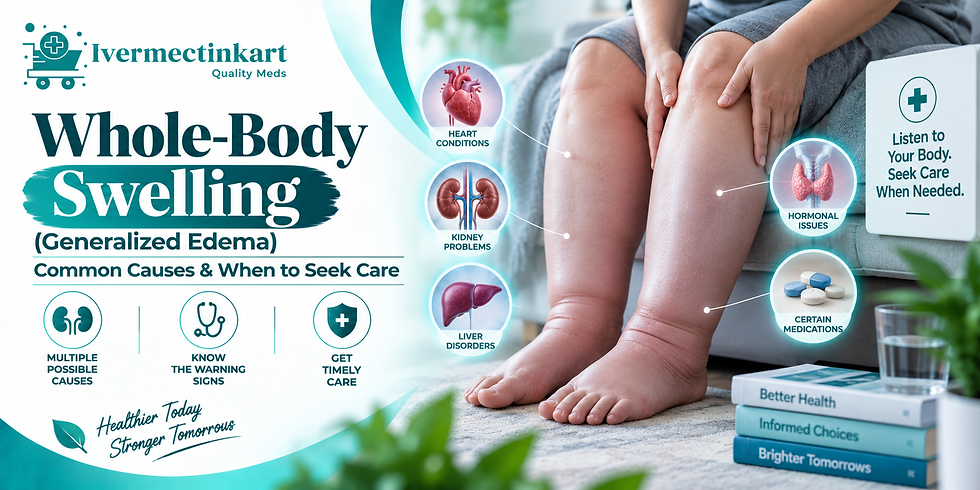
What Is Generalized Edema?
Edema means swelling caused by excess fluid collecting within the body's tissues. When swelling affects many parts of the body rather than one limited area, it is described as generalized edema; severe widespread edema is sometimes called anasarca.
Generalized edema may affect the legs, feet, hands, face, eyelids, abdomen, and other tissues.
Depending on its cause and severity, it may be accompanied by rapid weight gain as the body retains fluid.
What is pitting edema?
Some edema is pitting, meaning gentle pressure on the swollen skin leaves a temporary indentation. Non-pitting edema does not leave the same dent.
This distinction can provide useful clinical information, but it cannot identify the underlying disease by itself.
The location of swelling also matters. In someone who spends much of the day standing, fluid may become more noticeable around the ankles and lower legs. In someone who is mostly confined to bed, dependent swelling may develop around the thighs, buttocks, or other areas where gravity causes fluid to collect.
Common patterns of swelling and what they may indicate
Swelling pattern | Possible explanation | Other clues that may occur |
Both legs plus other body areas | Heart, kidney, liver or low-protein disorders | Weight gain and symptoms related to the underlying condition |
Puffy eyelids plus leg or body swelling | Kidney disorders including nephrotic syndrome | Foamy urine or weight gain from fluid retention |
Legs and abdomen | Heart failure or advanced liver disease | Breathlessness with heart failure; ascites or jaundice with liver disease |
One suddenly swollen leg | Blood clot or another local problem | Pain, warmth or tenderness may occur |
Face, lips or tongue suddenly swelling | Angioedema | Hives may occur; throat involvement can affect breathing |
Mild ankle swelling | Prolonged standing, pregnancy, medicines or other causes | Often dependent on circumstances |
What Causes Whole-Body Swelling?
The major medical causes of generalized edema include heart failure, kidney disorders, and liver failure.
Low blood protein levels, certain medicines, pregnancy, excess sodium, and other conditions can also contribute.
Heart failure
When the heart cannot pump blood effectively enough, pressure can build within the circulation and fluid can move into surrounding tissues. Swelling may occur in the feet, ankles, legs, abdomen, fingers, or other areas.
Breathlessness provides an important clue. Someone with heart failure may become short of breath during activity, have difficulty breathing while lying flat, or wake at night severely short of breath. Fluid retention can also cause relatively rapid weight gain.
The American Heart Association information on heart failure symptoms explains how swelling and weight gain can reflect fluid accumulation and why worsening breathlessness or edema deserves attention.
Kidney disease
Healthy kidneys help regulate the body's salt and fluid balance. When kidney function becomes impaired, excess salt and fluid may accumulate, contributing to swelling.
Some kidney conditions cause edema through another mechanism: loss of protein into the urine.
Nephrotic syndrome, for example, involves excessive protein loss in urine and low blood levels of albumin, an important blood protein. Symptoms can include puffy eyelids, swelling in the legs, feet, abdomen or elsewhere, foamy urine, and weight gain caused by retained fluid.
The National Institute of Diabetes and Digestive and Kidney Diseases information on nephrotic syndrome explains how damage to the kidney's filtering structures can allow excessive protein to escape into urine.
Liver disease
Advanced liver disease can also cause fluid accumulation.
Cirrhosis can lead to portal hypertension—raised pressure in the blood vessels supplying the liver—and other changes that contribute to fluid retention. People may develop edema in the legs, ankles, and feet as well as fluid accumulation within the abdomen, called ascites.
Other clues can include jaundice, easy bruising, poor appetite, weakness, or confusion, although symptoms vary considerably.
Low blood protein levels
Albumin helps keep fluid within blood vessels. When blood protein becomes severely depleted, fluid can move more readily into tissues.
Low albumin may result from conditions involving the kidneys or liver, protein loss through the digestive system, or severe nutritional deficiency.
Generalized edema is not a diagnosis. Heart, kidney, liver, protein-balance, and other problems can all produce widespread swelling through different mechanisms. Identifying the underlying cause is therefore more important than simply trying to remove the visible fluid.
Can Medicines Cause Generalized Edema?
Yes. Medication-related fluid retention is an important possibility, particularly when swelling begins or worsens after a new medicine is started or its dose is changed. However, swelling should not automatically be blamed on medication without considering other medical causes.
Medicines associated with edema can include some:
Calcium-channel blockers used for high blood pressure
Nonsteroidal anti-inflammatory drugs (NSAIDs)
Corticosteroids
Estrogens
Thiazolidinediones used for diabetes
Medicines used for certain types of nerve pain
Do not stop a prescribed medicine simply because you suspect it is causing swelling. A healthcare professional can review the timing, dose, other medications, and possible alternative explanations and decide whether treatment should be changed.
Sudden swelling of the face, lips, tongue, or throat is different from gradual medication-related fluid retention and may represent angioedema. Some medicines can cause angioedema, and airway involvement requires emergency care.
How Do Doctors Find the Cause of Generalized Edema?
Evaluation usually combines the pattern and timing of swelling with medical history, examination, and targeted laboratory or imaging tests. Because generalized edema has multiple possible causes, there is no single test that identifies every case.
A healthcare professional may ask:
When did the swelling begin?
Did it appear suddenly or gradually?
Which body areas are affected?
Has body weight increased quickly?
Is there shortness of breath, particularly when lying down?
Has urine output or appearance changed?
Is the urine unusually foamy?
Is there abdominal swelling?
Is there jaundice or a history of liver disease?
Have any medicines recently been started or changed?
Is there known heart, kidney, or liver disease?
For generalized edema, commonly considered investigations include blood counts, electrolytes, kidney-function tests, liver tests, blood protein measurements, and urinalysis to look for protein or blood. Further testing depends on the suspected cause.
For example, suspected heart failure may lead to cardiac investigations, while substantial urinary protein may direct the evaluation toward kidney disease.
Symptoms accompanying generalized edema that can help guide medical evaluation
Additional finding | Why it matters | Appropriate response |
Shortness of breath or difficulty lying flat | May accompany heart failure or fluid in the lungs | Prompt assessment; severe breathing difficulty is an emergency |
Foamy urine | May indicate substantial urinary protein loss | Medical evaluation and urine testing |
Rapid fluid-related weight gain | May indicate increasing fluid retention | Contact a healthcare professional |
Abdominal swelling | May represent ascites from liver or heart disease, among other causes | Medical evaluation |
Jaundice | Can indicate significant liver dysfunction | Prompt medical assessment |
One painful, swollen leg | Can occur with a blood clot | Urgent medical evaluation |
Swollen tongue or throat | May represent angioedema affecting the airway | Emergency care |
How Is Generalized Edema Treated?
Treatment depends on the cause. Simply removing excess fluid without understanding why it accumulated may be inappropriate, because heart, kidney, liver, medication-related, and low-protein edema require different management.
Are diuretics always the answer?
No. Diuretics—often called water pills—help the kidneys remove sodium and water and are useful in several fluid-overload conditions. They are used, for example, in appropriate cases of heart failure, nephrotic syndrome, and cirrhosis-related fluid retention.
But they are prescription medicines with effects on blood pressure, kidney function, fluid balance, and electrolytes. They should not be self-started or borrowed from someone else simply because swelling is present.
Does reducing salt help?
Excessive sodium can contribute to fluid retention, and healthcare professionals may recommend sodium restriction for some conditions that cause edema.
The appropriate restriction is not identical for everyone, however. People with heart, kidney, or liver disease should follow individualized advice rather than adopting extreme salt or fluid restrictions independently.
Other measures such as leg elevation or compression garments can help certain forms of peripheral edema, but they are not universal treatments for unexplained whole-body swelling. The priority with generalized edema is determining why the fluid is accumulating.
When Should Whole-Body Swelling Be Treated as an Emergency?
Whole-body swelling needs urgent attention when it occurs with breathing problems, chest pain, airway swelling, or other signs suggesting a potentially dangerous underlying condition.
Seek emergency medical care for:
Severe or sudden shortness of breath
Chest pain, pressure, or tightness
Sudden swelling of the lips, mouth, tongue, or throat, particularly with difficulty breathing
Fainting or severe breathing difficulty
Coughing up blood
Rapidly developing swelling with serious illness
Breathing difficulty can occur when fluid accumulates in the lungs and may require hospital treatment. Sudden throat or tongue swelling can obstruct the airway and is also a medical emergency.
The MedlinePlus guidance on edema and swelling also advises medical evaluation for unexplained swelling, particularly when heart, kidney, or liver disease may be involved.
Even without emergency symptoms, new generalized swelling should be medically evaluated rather than treated indefinitely at home. Prompt assessment is particularly important if swelling is increasing, accompanied by rapid weight gain or reduced urination, or occurs in someone with known heart, kidney, or liver disease.
Conclusion
Whole-body swelling, or generalized edema, means excess fluid is accumulating across multiple tissues and should not be treated as a diagnosis by itself. Heart failure, kidney disease, advanced liver disease, low blood protein, medicines, and other conditions can all cause edema, so treatment depends on identifying the underlying problem.
Arrange medical assessment for unexplained or increasing generalized swelling rather than self-treating with water pills or severe fluid restriction. Seek emergency care for swelling accompanied by severe breathing difficulty, chest pain, fainting, or sudden swelling of the tongue or throat. This information is educational and does not replace individualized medical evaluation.
Frequently Asked Questions
1. What causes swelling all over the body?
Whole-body swelling can result from heart failure, kidney disorders, liver disease, low blood protein, certain medicines, and other conditions. Because these causes require different treatments, new or unexplained generalized edema should be medically evaluated.
2. Can kidney problems make your whole body swell?
Yes. Kidney disease can cause sodium and fluid retention, while conditions such as nephrotic syndrome can cause substantial protein loss in urine. Both mechanisms can produce edema affecting the eyelids, legs, abdomen, or other body areas.
3. Can heart problems cause generalized edema?
Yes. Heart failure can cause fluid to accumulate in the legs, ankles, abdomen, and other tissues. Breathlessness, difficulty breathing when lying flat, fatigue, and rapid fluid-related weight gain may occur alongside swelling and should be discussed promptly with a healthcare professional.
4. Can liver disease cause swollen legs and abdomen?
Yes. Advanced liver disease such as cirrhosis can cause edema in the legs, ankles, and feet and fluid accumulation in the abdomen, called ascites. Jaundice, easy bruising, confusion, or other liver-related symptoms may also occur.
5. Should I take a water pill for whole-body swelling?
Not without appropriate medical advice. Diuretics can help some causes of fluid overload, but unexplained swelling has many possible causes and treatment varies accordingly. These medicines can also affect kidney function, blood pressure, and electrolyte balance, so the underlying condition should first be assessed.
6. When is swelling an emergency?
Seek emergency care when swelling occurs with severe breathing difficulty, chest pain, fainting, or sudden swelling of the lips, tongue, mouth, or throat. These symptoms can indicate serious heart, lung, circulatory, or airway problems requiring immediate treatment.


Comments