
What Causes Acne? Hormones, Diet, Stress & Medications Explained

Updated: Aug 20
Written by Dr. Charles Drew, Lead Pharmaceutical Content Specialist & Clinical Drug Information Reviewer
Reviewed for medical accuracy under the Ivermectinkart Editorial Policy
Introduction
Acne is one of the most common skin conditions affecting teenagers, adults, and even older individuals. Many people believe acne is only caused by oily skin or poor hygiene, but the reality is far more complex. Hormones, diet, stress, medications, genetics, and lifestyle factors all play a crucial role in acne development.
Understanding what causes acne is the first step toward effective treatment and long-term prevention. In this detailed guide by Ivermectinkart, we explain the real causes of acne, how different factors trigger breakouts, and what you can do to manage acne safely and effectively.
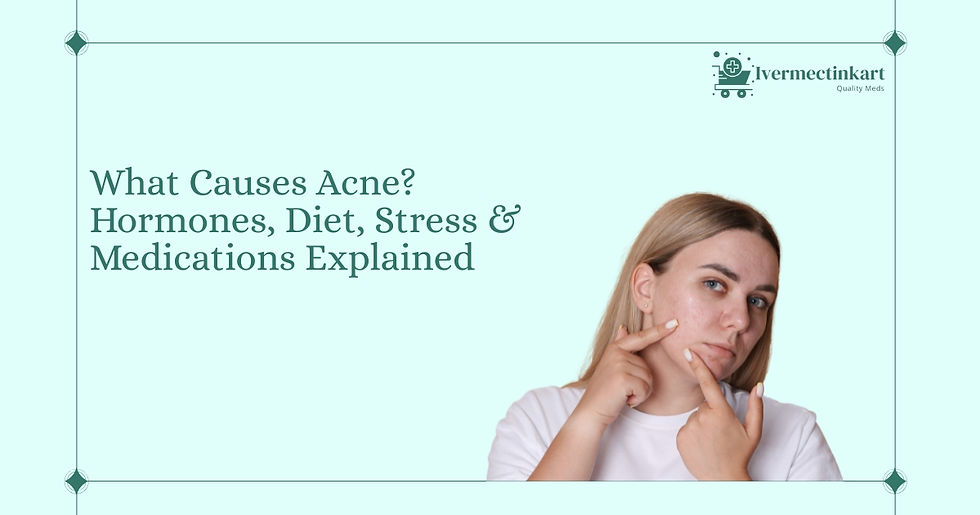
What Is Acne?
Acne is a chronic inflammatory skin condition that occurs when hair follicles become clogged with oil (sebum), dead skin cells, and bacteria. This blockage leads to different types of acne lesions, including:
Whiteheads
Blackheads
Papules
Pustules
Nodules
Cysts
Acne most commonly appears on the face, chest, back, shoulders, and upper arms.
Primary Causes of Acne
1. Hormonal Imbalance and Acne
Hormones are one of the biggest causes of acne, especially during:
Puberty
Menstrual cycles
Pregnancy
Polycystic Ovary Syndrome (PCOS)
Menopause
Androgens (male hormones present in both men and women) increase during these stages, stimulating excess oil production. This excess oil clogs pores and promotes acne-causing bacteria.
Hormonal acne typically appears on the:
Jawline
Chin
Lower cheeks
2. Diet and Acne Connection
Diet plays a significant role in acne development. Research shows that certain foods may worsen acne by increasing inflammation and insulin levels.
Foods that may trigger acne include:
Sugary foods
White bread and refined carbs
Fast food and fried foods
Dairy products (especially skim milk)
Processed snacks
Acne-friendly foods include:
Fruits and vegetables
Whole grains
Omega-3 fatty acids
Zinc-rich foods
A poor diet can increase oil production and inflammation, worsening acne symptoms.
3. Stress and Acne Breakouts
Stress does not directly cause acne, but it can significantly worsen existing acne. When you’re stressed, your body releases cortisol, a stress hormone that increases oil production in the skin.
Stress-related acne is common during:
Exams
Work pressure
Emotional trauma
Sleep deprivation
Managing stress through meditation, exercise, and proper sleep can improve acne over time.
4. Medications That Cause Acne
Certain medications can trigger or worsen acne as a side effect. These include:
Corticosteroids
Hormonal contraceptives
Testosterone therapy
Lithium
Certain anti-epileptic drugs
Medication-induced acne often appears suddenly and may not respond to typical acne treatments.
5. Excess Oil (Sebum) Production
Sebaceous glands naturally produce oil to protect the skin. However, excessive oil production can clog pores and trap bacteria, leading to acne.
Oily skin is influenced by:
Genetics
Hormones
Climate
Skincare products
6. Clogged Pores and Dead Skin Cells
When dead skin cells do not shed properly, they mix with oil and block hair follicles. This creates an ideal environment for acne-causing bacteria to grow.
Using harsh scrubs can actually worsen this condition by irritating the skin.
7. Bacteria and Inflammation
A specific bacteria present on the skin multiplies inside clogged pores, triggering inflammation. This results in red, swollen, and painful acne lesions.
Inflammatory acne is harder to treat and may lead to scarring if not managed properly.
8. Genetics and Family History
If your parents had acne, you are more likely to develop it. Genetics influence:
Oil production
Skin cell turnover
Inflammatory response
9. Lifestyle and Environmental Factors
Other contributors to acne include:
Poor sleep
Smoking
Pollution
Touching the face frequently
Dirty pillowcases or makeup brushes
Types of Acne Caused by Different Factors
Hormonal acne – Chin and jawline
Diet-related acne – Forehead and cheeks
Stress acne – Sudden flare-ups
Medication-induced acne – Chest, back, face
Cystic acne – Deep, painful nodules
How to Prevent Acne Naturally
Cleanse your face twice daily
Avoid harsh skincare products
Eat a balanced diet
Manage stress levels
Get enough sleep
Avoid touching pimples
Use non-comedogenic products
When to See a Doctor
You should consult a healthcare professional if:
Acne is painful or cystic
Over-the-counter treatments fail
Acne causes scarring
Adult acne persists
Conclusion
Acne is a complex condition influenced by hormones, diet, stress, medications, genetics, and lifestyle choices. Understanding these root causes helps you choose the right treatment and prevent future breakouts.
At Ivermectinkart, we believe that informed decisions lead to healthier skin. By addressing acne from the inside and outside, long-term skin clarity is achievable.
FAQs
What is the main cause of acne?
The main causes of acne are hormonal changes, excess oil production, clogged pores, bacteria, and inflammation.
Can stress cause acne?
Stress does not directly cause acne, but it worsens breakouts by increasing oil production.
Does diet really affect acne?
Yes, diets high in sugar, refined carbs, and dairy can increase acne severity.
Which hormones cause acne?
Androgens increase oil production, leading to clogged pores and acne.
Can medications cause acne?
Yes, steroids, hormonal drugs, and certain medications can trigger acne.
Is acne only a teenage problem?
No, adult acne is very common, especially in women.
How long does acne last?
Acne duration varies. With proper treatment, acne can improve within 6–8 weeks.


Comments