
Fungal vs Bacterial Infections: How to Tell the Difference

Updated: Sep 23
Written by Dr. Charles Drew, Lead Pharmaceutical Content Specialist & Clinical Drug Information Reviewer
Reviewed for medical accuracy under the Ivermectinkart Editorial Policy
Introduction
Fungal vs bacterial infections can sometimes look surprisingly similar, especially when they affect the skin, lungs, mouth, or other areas where redness, swelling, discomfort, or discharge may occur. The key difference is the organism causing the infection: fungal infections are caused by fungi such as yeasts or molds, while bacterial infections are caused by disease-causing bacteria. That distinction matters because the medicines used to treat them are different. Antibiotics target certain bacterial infections, while fungal infections require antifungal treatment. Symptoms can provide useful clues, but appearance alone is not always enough to identify the cause. This guide explains the common differences, typical symptoms, diagnostic tests, treatment approaches, and signs that mean you should seek medical care.
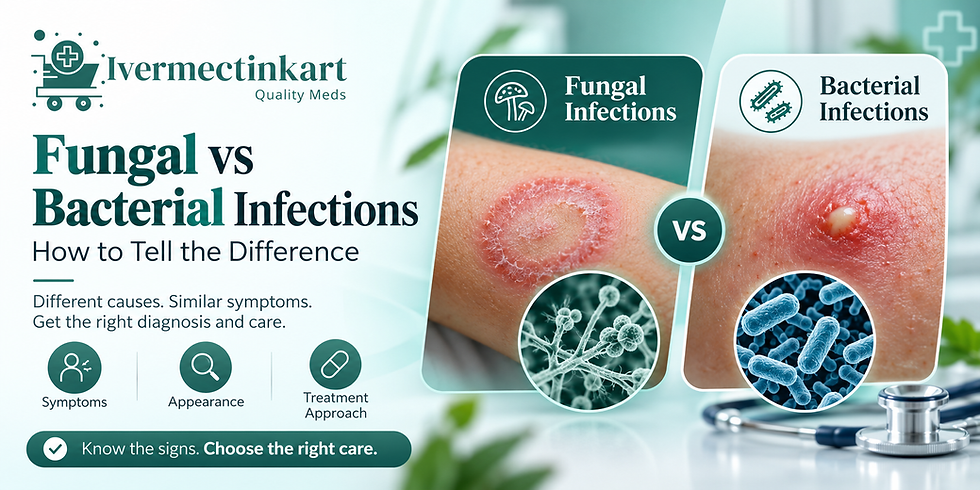
What Is the Difference Between Fungal and Bacterial Infections?
The main difference is the type of microorganism responsible for the illness. Bacteria are single-celled organisms, while fungi include yeasts and molds and are biologically different from bacteria. Because of those differences, medicines that work against bacteria generally do not work against fungi.
Bacteria are found throughout the environment and naturally live on and inside the human body. Many are harmless or beneficial, but certain bacteria can cause infections when they enter vulnerable tissues or multiply where they should not.
Fungi are also common in the environment and can normally live on parts of the body without causing illness. Problems develop when certain fungi are acquired from the environment or normally present fungi grow out of control. According to the CDC overview of fungal diseases , common fungal diseases include ringworm, nail infections, and vaginal yeast infections.
Common differences between fungal and bacterial infections
Feature | Fungal Infection | Bacterial Infection |
Cause | Fungi, including yeasts and molds | Disease-causing bacteria |
Common examples | Ringworm, athlete’s foot, nail fungus, candidiasis | Strep throat, some UTIs, cellulitis, some pneumonias |
Skin clues | Often itchy, scaly, peeling, cracked, or slowly spreading | May be warm, swollen, tender, painful, or associated with pus |
Usual treatment category | Antifungal medicine | Antibiotics when indicated |
Diagnostic testing | Microscopy, fungal culture, or other targeted tests | Bacterial culture, Gram stain, molecular tests, or other targeted tests |
Can symptoms alone confirm it? | No | No |
A rash, fever, cough, discharge, or sore cannot reliably tell you whether an infection is fungal or bacterial. Location, appearance, risk factors, medical history, and sometimes laboratory testing are needed to determine the cause.
What Do Fungal Infections Usually Look and Feel Like?
Fungal infections often cause itching, scaling, peeling, cracking, or slowly expanding skin changes, but symptoms depend heavily on where the infection occurs. Fungal disease is not limited to the skin—some fungi can cause infections in the lungs, bloodstream, or other organs, particularly in people with certain risk factors.
Fungal skin infections
Ringworm is one of the best-known examples. Despite its name, it is caused by a fungus rather than a worm.
On many areas of the body, ringworm can produce round or ring-shaped patches with a raised, scaly edge. The center may become clearer as the patch expands. Depending on skin tone, affected areas may look red or pink, or brown or gray.
Athlete’s foot can look different. It may cause:
Itching, burning, or stinging
Dry or scaly skin
Peeling
Cracks between the toes
Blisters in some cases
Soft, whitish skin between the toes
The American Academy of Dermatology's description of ringworm symptoms also explains that fungal infections can look different depending on whether they affect the skin, feet, scalp, groin, hands, or nails.
Nail fungal infections
Fungal nail infections can cause nails to become discolored, thick, brittle, crumbly, or distorted. Nail changes usually develop gradually rather than appearing overnight.
However, abnormal-looking nails are not automatically fungal. Injury, psoriasis, and other conditions can cause similar changes.
Yeast infections
Candida is a type of yeast that normally lives on and inside the body. When it grows excessively, it can cause conditions such as vaginal candidiasis or oral thrush.
Symptoms vary by body site. This is one reason that "fungal infection" should not be treated as a single condition with one predictable set of symptoms.
What Do Bacterial Infections Usually Look and Feel Like?
Bacterial infection symptoms depend on the body part involved and the particular bacteria responsible.
In skin infections, increasing warmth, tenderness, swelling, pain, spreading redness, or pus can suggest a bacterial cause, but these findings still do not confirm it by themselves.
Bacterial skin infections
Cellulitis is a useful example. It is a bacterial infection involving deeper layers of the skin and underlying tissue.
An affected area typically becomes swollen and discolored and may feel warm and tender. Some people also develop fever, chills, or fatigue.
Bacterial skin infections may sometimes cause:
Pain or tenderness
Warmth
Swelling
Pus or drainage
Rapidly spreading skin changes
Fever or chills
But there is considerable overlap. Some fungal infections can become very inflamed, and a damaged fungal rash can occasionally develop a secondary bacterial infection.
Bacterial infections elsewhere in the body
Bacteria can infect many different sites. Examples include certain urinary tract infections, pneumonias, throat infections, wound infections, and bloodstream infections.
The symptoms therefore depend more on the infected organ than simply on whether the cause is bacterial. Burning urination, for example, suggests a urinary problem, while cough and breathing difficulty point toward the respiratory system—but neither symptom tells you the responsible microorganism by itself.
Can You Tell a Fungal vs Bacterial Infection From Symptoms Alone?
Usually, no. Symptoms may make one diagnosis more likely, particularly with characteristic superficial skin infections, but fungal and bacterial infections can overlap enough that guessing from appearance alone can lead to the wrong treatment.
The CDC notes that fungal infections can resemble diseases caused by bacteria or viruses and that misdiagnosis can delay appropriate treatment.
How doctors distinguish between them
A healthcare professional may first consider:
Where the symptoms occur
How quickly they developed
Whether a rash is itchy, painful, scaly, warm, or spreading
Recent antibiotic use
Exposure to infected people, animals, soil, or contaminated surfaces
Existing medical conditions
Medicines that affect immune function
Previous infections and treatments
Testing is not necessary for every mild, typical infection. When the diagnosis is uncertain, the infection is persistent or severe, or treatment has failed, laboratory testing becomes more important.
What tests can identify the cause?
For suspected fungal disease, a clinician may examine skin scrapings, nail clippings, swabs, blood, urine, sputum, or other samples depending on the infection site. A fungal culture test used to identify fungal infections can help determine whether a fungus is present and sometimes which fungus is responsible.
For suspected bacterial disease, samples can similarly come from blood, urine, wounds, sputum, stool, or the throat. A bacteria culture test and what its results mean can identify certain disease-causing bacteria and help guide appropriate treatment.
Why Does the Correct Diagnosis Matter for Treatment?
Correct identification matters because antifungals and antibiotics are not interchangeable. Using the wrong medicine may fail to treat the infection, delay appropriate care, cause side effects, and contribute to antimicrobial resistance when antibiotics are used unnecessarily.
Antibiotics work against susceptible bacteria. They do not treat fungal infections. In fact, antibiotic use can sometimes disrupt the body's normal microorganisms and create conditions that allow yeast to overgrow.
Antifungal medicines are designed to kill fungi or prevent them from growing. Depending on the infection, treatment may involve a cream, ointment, oral medicine, or intravenous medication.
Treatment differences and important dos and don'ts
Situation | Do | Don't |
Possible fungal skin infection | Get advice if the diagnosis is uncertain or symptoms persist | Assume every itchy rash is fungal |
Suspected bacterial infection | Seek appropriate evaluation, especially if symptoms are worsening | Use leftover antibiotics |
Prescribed antibiotic | Follow the prescribed directions | Use it to treat a known fungal infection |
Prescribed antifungal | Use it for the recommended duration and indication | Assume one antifungal treats every fungal disease |
Symptoms worsening despite treatment | Contact a healthcare professional | Keep changing medicines without identifying the cause |
Treatment also varies considerably within each category. Different bacteria can respond differently to antibiotics, and different fungi may require different antifungals. Some organisms are resistant to medicines that would ordinarily be expected to treat them.
Who Is More Likely to Develop Fungal or Bacterial Infections?
Anyone can develop either type of infection, but certain circumstances change the risk. Warm, moist skin environments, immune suppression, damaged skin, healthcare exposure, underlying illness, and some medications can make particular infections more likely.
Factors that can encourage fungal infections
Superficial fungal infections often thrive in warm, moist conditions. Risk may increase with prolonged sweating, damp footwear, shared changing areas, close contact with an infected person or animal, and certain medical conditions.
More serious fungal disease is a different issue. People with weakened immune systems—including some people receiving immune-suppressing treatments—can have a greater risk of invasive fungal infections.
Factors that can encourage bacterial infections
Cuts, wounds, burns, surgical sites, and other breaks in the skin can provide bacteria with a route into tissue. Risk factors vary considerably according to the specific infection.
Good hygiene, appropriate wound care, and following infection-prevention advice can reduce the risk of some infections, although no prevention strategy eliminates every possibility.
When Should You Seek Medical Care?
Seek medical advice when an infection is severe, rapidly worsening, repeatedly returning, or not improving as expected. Prompt assessment is particularly important because some apparently simple skin or respiratory infections can become serious.
Get urgent medical attention for symptoms such as:
Difficulty breathing or significant shortness of breath
Confusion, unusual drowsiness, or difficulty staying alert
Severe or rapidly worsening pain
Rapidly spreading redness or swelling
High or persistent fever with worsening illness
Red streaks extending from an infected skin area
Signs of a severe allergic reaction
Serious symptoms in someone with a significantly weakened immune system
A suspected cellulitis infection deserves timely medical assessment because it can spread if untreated.
People who are immunocompromised, hospitalized, receiving certain immune-suppressing medicines, or living with serious chronic illness may also need earlier assessment for possible fungal disease.
Conclusion
Understanding fungal vs bacterial infections begins with recognizing that they come from fundamentally different organisms and usually require different treatments. Itchy, scaly, slowly spreading skin changes can suggest some fungal infections, while warmth, tenderness, swelling, pus, or rapidly spreading inflammation can occur with bacterial infections. However, these are clues rather than a reliable home diagnosis.
If symptoms are persistent, severe, unusual, or getting worse, seek professional medical advice rather than choosing antibiotics or antifungals by guesswork. This information is educational and does not replace diagnosis or treatment from a qualified healthcare professional. Use appropriately prescribed medicines exactly as directed.
Frequently Asked Questions
1. How can I tell if a skin infection is fungal or bacterial?
You often cannot be certain from appearance alone. Fungal skin infections commonly cause itching, scaling, or defined borders, while bacterial infections may cause warmth, swelling, tenderness, or pus. Because symptoms overlap, persistent or worsening infections should be professionally evaluated.
2. Does itching mean an infection is fungal?
No. Itching is common with fungal skin infections, but allergies, eczema, insect bites, and other conditions can also itch. The pattern, location, appearance, exposures, and sometimes laboratory testing help determine the actual cause.
3. Does pus always mean a bacterial infection?
No, although pus can occur with bacterial infections. Some fungal conditions can produce inflamed or pus-filled lesions, and mixed infections are possible. A clinician may need to examine or test the affected area rather than relying on pus alone.
4. Can antibiotics cure a fungal infection?
No. Antibiotics are designed to treat susceptible bacterial infections, not fungal infections. Fungal diseases require appropriate antifungal treatment when medication is needed, and unnecessary antibiotic use can contribute to resistance and may increase the risk of some fungal infections.
5. How do doctors test for fungal and bacterial infections?
Testing depends on the infection site. Doctors may collect skin, nail, blood, urine, sputum, wound, or other samples for microscopy, cultures, or other laboratory tests. These tests can help identify the organism and guide appropriate treatment.
6. What should I do if an infection is not improving with treatment?
Contact a healthcare professional rather than switching medicines yourself. The original diagnosis may need reconsideration, the organism may be resistant, or another condition may be causing the symptoms. Severe or rapidly worsening symptoms require more urgent assessment.


Comments