
Nail Fungus (Onychomycosis): Causes, Treatment, and Prevention

Updated: 6 days ago
Written by Dr. Charles Drew, Lead Pharmaceutical Content Specialist & Clinical Drug Information Reviewer Reviewed for medical accuracy under the Ivermectinkart Editorial Policy
Introduction
Nail fungus, medically called onychomycosis, is a fungal infection that can make a fingernail or toenail thick, discoloured, brittle, crumbly, or partly separated from the nail bed. It is much more common in toenails and tends to become more frequent with age. The infection is usually treatable, but clearing the fungus and growing a healthy-looking nail are two different stages, so visible recovery can take many months. Just as importantly, not every yellow, thick, or damaged nail is caused by fungus, which is why persistent nail changes sometimes need testing before treatment begins. This guide explains what causes nail fungus, how it is diagnosed, which treatments may be considered, how long improvement can take, and what can reduce the chance of another infection. Knowing what to expect can help you avoid ineffective remedies and recognise when professional assessment is worthwhile.

What Is Nail Fungus and What Does It Look Like?
Nail fungus is an infection of the nail plate, the tissue beneath it, or both. The most familiar signs are yellow, white, or brown discolouration, thickening, debris beneath the nail, brittleness, crumbling, and lifting of the nail away from the skin.
Toenails are affected far more often than fingernails. Early infection may involve only the tip or side of one nail, while more established infection can involve much of the nail and make cutting or wearing shoes uncomfortable.
You can review recognised nail fungus signs and symptoms from the American Academy of Dermatology, including the range of colour and texture changes that may occur.
Typical changes include:
White, yellow, brown, or occasionally darker discolouration
Thickening of the nail
A brittle, cracked, split, or crumbly edge
Material building up beneath the nail
Lifting or separation from the nail bed
Distortion of the nail's normal shape
Discomfort or pain in more advanced cases
These signs are useful clues, but appearance alone cannot always establish the cause.
Nail fungus compared with several conditions that can produce similar-looking nail changes
Condition | Changes that may resemble nail fungus | Why assessment may matter |
Nail fungus | Thickening, yellow or white colour, crumbling, debris, lifting | Testing can confirm fungus and sometimes identify the organism |
Nail psoriasis | Thickening, lifting, discolouration, surface changes | Antifungal medicine will not treat psoriasis itself |
Repeated nail trauma | Thick or distorted nail, bruising, separation | Pressure from footwear or repeated injury may continue unless the cause is addressed |
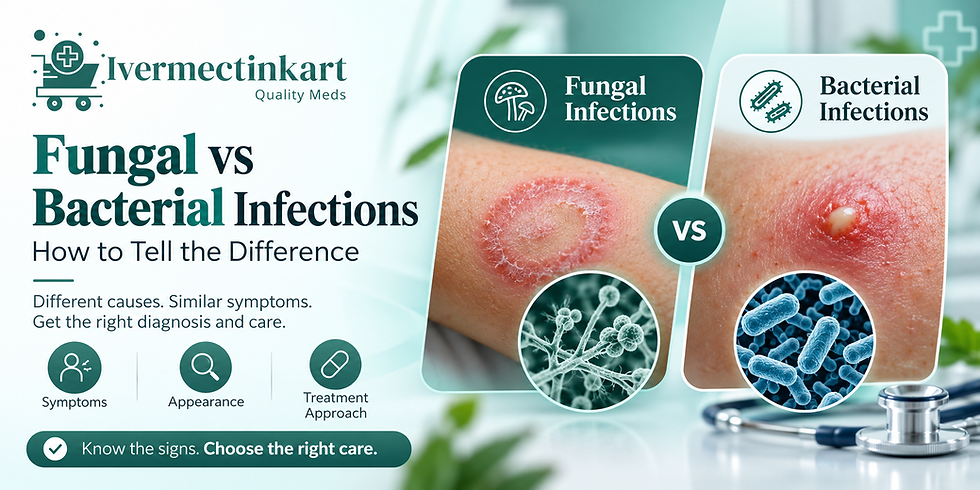
Bacterial nail changes | Discolouration and separation can occur | Treatment differs from treatment for a fungal infection |
Other nail disorders | Persistent colour, shape, or growth changes | A clinician can assess unusual, new, or progressive changes that do not fit a typical fungal pattern |
Psoriasis, injury, lichen planus, bacterial infection, and less common nail diseases can resemble onychomycosis. A new or changing dark band, unexplained bleeding, or an unusual change affecting one nail deserves medical evaluation rather than being assumed to be fungus.
What Causes Nail Fungus?
Nail fungus develops when fungi establish an infection in or under the nail. Dermatophytes—the same broad group of fungi responsible for conditions such as athlete's foot—cause many cases, although yeasts and non-dermatophyte moulds can also infect nails.
Fungi generally do well in warm, moist environments. Exposure does not mean you will automatically develop an infection, but damaged nails, prolonged moisture, existing athlete's foot, and certain health conditions can make infection easier to establish.
Who is more likely to develop onychomycosis?
Risk tends to increase with age. Other recognised risk factors include athlete's foot, repeated nail injury, poor circulation in the legs or feet, diabetes, weakened immune function, exposure to an infected household member, and frequent use of communal bathing or changing facilities.
Sweaty feet and enclosed footwear can also create favourable conditions for fungi. Athlete's foot is particularly relevant because fungi affecting the skin can spread to nearby toenails.
Can nail fungus spread?
Yes. Fungi can spread between nails and may be shared indirectly through contaminated nail tools, footwear, towels, floors, or other surfaces.
That does not mean every exposure results in infection. Keeping feet dry, treating athlete's foot, and avoiding shared personal items can reduce opportunities for fungi to spread.
How Is Nail Fungus Diagnosed?
A clinician can often suspect nail fungus from the appearance and pattern of nail changes, but laboratory confirmation can be important because several non-fungal conditions look similar.
Depending on the situation, a clipping, scraping, or material from beneath the nail may be examined for fungal elements.
Testing methods may include microscopy, fungal culture, examination of specially stained nail clippings, or polymerase chain reaction (PCR) testing. Not every patient requires every test; the method used depends on local availability and the clinical situation.
The American Academy of Dermatology advises confirming a fungal infection before oral antifungal treatment , because a substantial proportion of nails that appear fungal can have another explanation. Confirmation helps avoid unnecessary exposure to systemic medicines and directs treatment toward the actual problem.
A thick or yellow nail is a symptom, not a diagnosis. When prescription oral treatment is being considered, confirming that fungus is actually present can prevent months of treating the wrong condition.
How Is Nail Fungus Treated?
Nail fungus treatment depends on how many nails are involved, how much of each nail is affected, nail thickness, the likely organism, other medical conditions, medicines you take, and your treatment preferences. Options include antifungal products applied directly to the nail, prescription oral antifungals, and sometimes procedures that reduce or remove diseased nail material.
Topical antifungal treatment
Prescription nail solutions or lacquers can be useful for selected mild or limited infections. Examples used in different countries include ciclopirox, efinaconazole, tavaborole, and amorolfine; availability and approved indications vary by jurisdiction.
Topical therapy usually requires persistence because medicine has to reach fungi through or around a hard nail plate. Treatment commonly continues for many months, and clinicians may combine it with careful nail trimming or debridement when a nail is unusually thick.
Ordinary antifungal creams intended for athlete's foot should not automatically be expected to cure an established nail infection. The nail plate creates a barrier that many skin preparations do not penetrate adequately.
Oral antifungal treatment
Prescription oral medicines such as terbinafine or itraconazole may be considered when disease is more extensive or when topical treatment is unlikely to be sufficient. For many dermatophyte nail infections, oral terbinafine is commonly used as a first-line systemic option, although the appropriate choice depends on the patient, organism, contraindications, drug interactions, and local prescribing guidance.
Oral antifungals are not appropriate for everyone. Clinicians may review liver health, pregnancy or breastfeeding status, kidney function where relevant, existing medical conditions, and possible interactions with prescription medicines, over-the-counter products, and supplements. Blood testing may be required with some regimens.
The CDC advises that antifungal medicines should be used exactly as directed , because antifungal treatment can require prolonged use and may cause side effects or interact with other medicines.
How the main approaches to nail fungus treatment differ
Treatment approach | When it may be considered | Important limitations |
Prescription topical antifungal | Mild or relatively limited infection; situations where oral treatment is unsuitable | Requires prolonged, consistent application and generally works less well for extensive or very thick disease |
Prescription oral antifungal | More extensive infection or cases where systemic treatment offers a better chance of clearance | Requires clinician assessment because of contraindications, side effects, and drug interactions |
Nail trimming or debridement | Thick or uncomfortable nails, often alongside antifungal treatment | Helps reduce diseased nail material but is not automatically a stand-alone cure |
Partial or complete nail removal | Selected difficult, painful, or treatment-resistant cases | Requires a medical procedure and nail regrowth can take many months |
Laser or light-based approaches | Sometimes marketed for cosmetic or fungal nail treatment | Evidence and regulatory indications vary; they should not be assumed equivalent to established antifungal therapy |
What about home remedies?
Tea tree oil, mentholated ointments, vinegar, and numerous other home treatments are commonly discussed online. Small studies have investigated some of these approaches, but evidence is not strong enough to regard them as dependable substitutes for established antifungal treatment.
Home treatment should be particularly cautious when a person has diabetes, poor circulation, loss of sensation in the feet, or a weakened immune system. Cutting deeply into a thick nail or damaging surrounding skin can create an additional problem.
How Long Does Nail Fungus Treatment Take?
Improvement is usually measured in months rather than days or weeks. Even when antifungal treatment successfully stops the infection, the damaged section of nail remains visible until new nail grows forward and replaces it.
Fingernails grow out more quickly than toenails. A toenail may need approximately 12 to 18 months to replace itself completely, so an old yellow or thickened section can remain for a considerable time after treatment has controlled the fungus.
A useful sign of progress is healthy-looking nail appearing from the base and gradually advancing outward. Treatment failure should not be judged simply because the end of the nail still looks damaged early in the process.
Recurrence is also possible after successful treatment. Reviews report substantial relapse or reinfection rates, which is why treating athlete's foot and reducing repeated exposure are important parts of long-term management.
How Can You Prevent Nail Fungus From Coming Back?
Prevention focuses on reducing moisture, limiting contact with contaminated surfaces and personal items, protecting nails from repeated damage, and treating fungal skin infections promptly. These measures cannot guarantee that onychomycosis will never recur, but they address several recognised routes of reinfection.
Practical habits include:
Wash your feet regularly and dry carefully, including between the toes.
Change damp or sweaty socks rather than remaining in them for hours.
Choose breathable, properly fitting footwear when practical.
Allow footwear to dry between uses.
Wear sandals or other footwear in communal showers, changing rooms, gyms, and pool areas.
Do not share shoes, socks, towels, nail clippers, files, or other nail tools.
Keep nails reasonably short and avoid repeatedly injuring the surrounding skin.
Clean nail tools between uses.
Treat athlete's foot rather than allowing it to persist beside the toenails.
Check previously affected nails periodically for new thickening, lifting, or discolouration.
Dermatologists provide further steps to prevent another nail infection , particularly for people who have already been treated for onychomycosis.
When Should You See a Healthcare Professional?
Arrange an assessment if a nail change is persistent, spreading, painful, difficult to manage, or uncertain in cause. Professional review is also sensible when treatment has not worked or when several nails are becoming involved.
Seek medical advice sooner if you have diabetes, poor circulation, reduced sensation in your feet, or a weakened immune system. People in these groups can face greater consequences from wounds and secondary infections involving the feet.
Prompt assessment is also warranted if the skin around a nail becomes increasingly red, hot, swollen, very painful, or produces drainage, particularly if you feel unwell or develop a fever. A new unexplained dark streak, pigment spreading onto nearby skin, bleeding, or another unusual single-nail change should also be examined rather than treated repeatedly as presumed fungus.
Conclusion
Nail fungus is usually manageable, but successful treatment requires the right diagnosis, an appropriate antifungal strategy, and enough time for healthy nail to grow. Topical medicines may suit limited disease, while oral treatment may be considered for more extensive onychomycosis after a healthcare professional reviews potential risks and interactions. Keeping feet dry, treating athlete's foot, protecting nails, and avoiding shared nail tools can help reduce reinfection.
If you have persistent nail changes, pain, diabetes, poor circulation, or an uncertain diagnosis, seek professional assessment rather than relying on self-treatment alone. This information is educational and does not replace individual medical advice.
Frequently Asked Questions
1 . Can nail fungus go away on its own?
Established nail fungus usually does not clear quickly without treatment, and it can persist or gradually involve more of the nail. Because other disorders can look similar, consider professional assessment if the change persists, spreads, becomes painful, or you are unsure of the cause.
2 . Is toenail fungus contagious?
Yes, the fungi involved can spread through direct contact or contaminated items and surfaces, although exposure does not always result in infection. Avoid sharing nail tools, towels, socks, and footwear, and wear footwear in communal showers or changing areas.
3 . What kills toenail fungus fastest?
There is no universally fastest treatment because effectiveness depends on infection severity, the organism involved, and individual health factors. Prescription oral antifungals are generally more effective for extensive disease than topical therapy, but they require medical assessment because contraindications and drug interactions can matter.
4 . Why does my toenail still look yellow after treatment?
The damaged portion does not immediately disappear when the fungus clears. Healthy nail must grow from the base and gradually replace it, and a complete toenail may take roughly 12 to 18 months to grow out. Persistent worsening should still be reviewed.
5 . Can athlete's foot cause nail fungus?
Yes. Dermatophyte fungi responsible for athlete's foot can also infect toenails, so an untreated skin infection can provide an ongoing source of fungal exposure. Treating athlete's foot and keeping the feet dry are useful parts of preventing fungal nail infection and recurrence.
6 . Should I cut away a fungal toenail?
Keeping a nail carefully trimmed can reduce discomfort, but digging into it or attempting to remove an infected nail yourself can injure the surrounding skin. Very thick, painful, or difficult nails may require professional debridement or removal, particularly in people with diabetes or poor circulation.


Comments