
Electrolytes and Hydration: Why Athletes Need Them

Updated: Sep 22
Written by Dr. Charles Drew, Lead Pharmaceutical Content Specialist & Clinical Drug Information Reviewer
Reviewed for medical accuracy under the Ivermectinkart Editorial Policy
Introduction
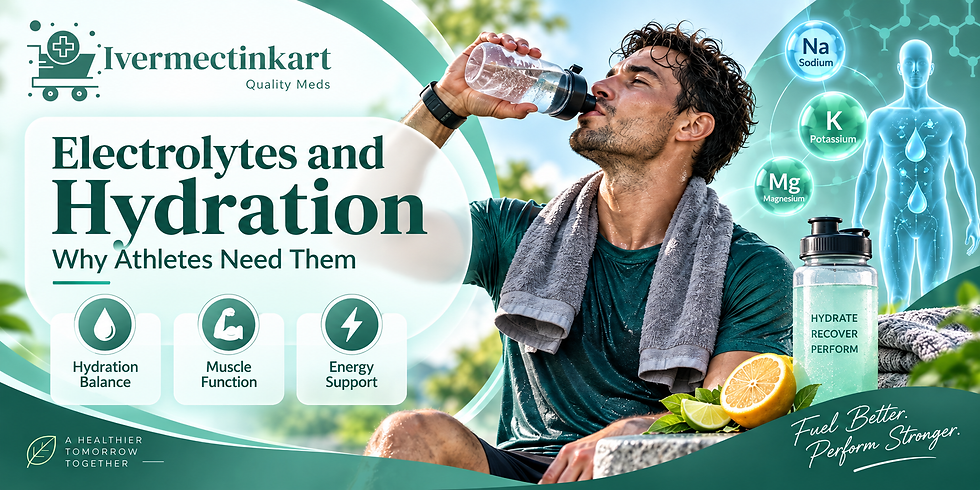
When you exercise, sweating helps control body temperature, but sweat also carries away water and electrolytes—especially sodium. That is why electrolytes and hydration are closely connected for athletes, particularly during long, intense, or hot-weather training. Electrolytes are electrically charged minerals that help support fluid balance, nerve signaling, and normal muscle function. However, this does not mean every workout requires an electrolyte drink or supplement. Water can be sufficient for many shorter or lower-intensity sessions, while longer exercise, heavy sweating, heat, and rapid recovery can make electrolyte replacement more relevant. Understanding what electrolytes actually do—and how individual sweat losses differ—can help athletes hydrate without falling into the equally problematic traps of drinking too little or too much.
What Are Electrolytes and Why Do Athletes Need Them?
Electrolytes are minerals that carry an electrical charge when dissolved in body fluids. They contribute to several basic physiological processes needed both at rest and during exercise.
Important electrolytes include:
Sodium
Potassium
Chloride
Magnesium
Calcium
For athletes, sodium deserves particular attention because it is the major electrolyte lost in sweat. The amount lost can vary substantially depending on how much someone sweats and how concentrated their sweat is.
Electrolytes help the body regulate the movement of water between different fluid compartments. They are also involved in nerve impulses and muscle contraction, while sodium plays an important role in maintaining extracellular fluid volume.
During ordinary daily life, a balanced diet generally supplies these minerals. Exercise changes the equation when substantial sweating causes additional fluid and electrolyte losses.
Major electrolytes and their roles in an athlete’s body
Electrolyte | Main Roles | Relevance During Exercise |
Sodium | Fluid balance, nerve and muscle function | Major electrolyte lost in sweat; helps support fluid retention |
Chloride | Fluid and acid-base balance | Commonly lost alongside sodium in sweat |
Potassium | Nerve signaling and muscle function | Lost in sweat, generally in smaller amounts than sodium |
Calcium | Muscle contraction, nerve signaling and bone health | Important for normal physiological function; usually obtained through diet |
Magnesium | Muscle and nerve function and numerous metabolic processes | Important nutritionally, but routine supplementation is not automatically required for hydration |
The important point is that athletes do not necessarily need to replace every electrolyte in sweat milligram for milligram during every workout. The practical need depends on exercise duration, sweat losses, diet, environmental conditions, and recovery time.
Why Do Hydration Needs Change During Exercise?
Exercise increases heat production, and sweating is one of the body’s main ways of releasing that heat. As sweat evaporates from the skin, it helps cool the body—but simultaneously removes water and electrolytes.
If those fluid losses become substantial without adequate replacement, an athlete can become hypohydrated, meaning the body contains less water than is optimal for normal physiological function.
The National Athletic Trainers’ Association guidance on fluid replacement explains that inadequate hydration can increase cardiovascular strain and affect exercise performance, while excessive fluid intake can also create health risks.
Sweat loss varies considerably between athletes
There is no universal amount of water or electrolytes that every athlete should consume.
Sweat rate can change with:
Exercise intensity and duration
Temperature and humidity
Clothing and protective equipment
Body size
Heat acclimatization
Fitness and training conditions
Individual physiology
Even the same athlete can have different hydration requirements on different days. A cool 45-minute gym session, for example, creates a very different hydration challenge from a two-hour outdoor training session in hot, humid weather.
That is why individualized hydration strategies are generally more useful than simply telling every athlete to drink a fixed amount each hour.
Good sports hydration is not about drinking the maximum amount possible. The goal is to replace enough fluid and electrolytes to support health and performance without drinking substantially beyond your losses.
Why Is Sodium Particularly Important for Athletic Hydration?
Sodium matters because athletes lose it in sweat, and sodium-containing fluids and foods can help replace those losses and support fluid retention. But sodium requirements vary considerably, so more sodium is not automatically better.
Sodium helps the body retain consumed fluid
Replacing water is only one part of rehydration.
Sodium can help the body retain ingested fluid, while sodium-containing drinks may also encourage continued drinking through their effect on thirst and beverage palatability. Sports Dietitians Australia notes that sodium and glucose can be useful components of rehydration strategies in appropriate circumstances.
This becomes particularly relevant after substantial sweat losses or when an athlete has limited time to recover before another training session or competition.
Some athletes lose considerably more sodium than others
You may have noticed white marks on dark exercise clothing or salt crystals on your skin after a long session. These can be clues that your sweat contains appreciable salt, although they do not tell you precisely how much sodium you have lost.
Sweat sodium concentration and sweat volume vary from person to person. Heat acclimatization can also alter sweat and electrolyte losses.
Consequently, two athletes completing the same event should not automatically assume they need identical electrolyte strategies.
When Do Athletes Need Electrolytes Instead of Just Water?
Water is an excellent hydration choice for many short or relatively low-intensity exercise sessions. Electrolyte-containing drinks become more useful when sweat and sodium losses are substantial, exercise is prolonged, conditions are hot, or rapid rehydration is needed.
Shorter and lighter exercise
For an ordinary short workout without heavy sweating, water plus normal meals will often cover fluid and electrolyte needs.
Athletes do not need to assume that sweating automatically means they need a specialized electrolyte product.
Longer or high-sweat exercise
Electrolyte replacement becomes more relevant as exercise duration and sweat losses increase.
Sports Dietitians Australia notes that electrolyte supplements may be useful during moderate- to high-intensity exercise lasting more than two hours in hot conditions. Sports drinks may also be useful during endurance events because they can provide carbohydrate for fueling as well as fluid and electrolytes.
That distinction is useful: an electrolyte drink and a sports drink are not necessarily the same product.
Training or competing in hot conditions
Heat can increase sweating substantially. Humidity can make exercise particularly challenging because sweat may evaporate less efficiently, reducing its cooling effect even while the athlete continues losing fluid.
Hot-weather athletes may therefore need a more deliberate hydration strategy, particularly during prolonged activity.
When water or an electrolyte-containing drink may be appropriate
Exercise Situation | Water | Electrolyte-Containing Fluid |
Short, light workout with little sweating | Usually appropriate | Usually unnecessary |
Typical moderate workout | Often sufficient | May be useful if sweat losses are high |
Long endurance training | Important | Often useful when substantial sodium and fluid are lost |
Prolonged exercise in heat | Important | May be particularly useful |
Heavy or “salty” sweating | Important | May help replace greater sodium losses |
Rapid recovery after substantial sweat loss | Required as part of rehydration | Sodium can support fluid retention |
Everyday hydration away from exercise | Usually the main choice | Generally unnecessary for most people |
These are general principles rather than individual prescriptions. Hydration requirements can differ markedly between athletes and sports.
How Can Athletes Build a Better Hydration Strategy?
A useful hydration strategy starts with your own exercise conditions and sweat losses rather than a generic rule. The aim is to begin training appropriately hydrated, limit excessive fluid deficits, and replace losses during recovery without overdrinking.
Start exercise appropriately hydrated
Hydration begins before training, not when you first become exhausted or overheated.
Regular fluid intake with meals and throughout the day can usually support normal hydration. Thirst, urine frequency and color, and changes in body mass can provide practical clues, although none is a perfect standalone measurement.
Estimate your sweat losses
One practical approach is to compare body weight immediately before and after a representative training session while also considering how much you drank and whether you urinated.
As a simple approximation, a 1 kg reduction in body mass represents roughly 1 litre of net fluid loss when other factors are accounted for. Sports Dietitians Australia recommends using pre- and post-exercise weight as one way of estimating post-exercise fluid replacement needs.
Sweat-rate estimates should ideally be repeated under different conditions because a winter training session may not represent losses during summer competition.
Practice the plan during training
Race day is a poor time to experiment with an unfamiliar hydration strategy.
Test the drinks, foods, and fluid quantities you intend to use during training. This also gives you an opportunity to see what your stomach tolerates during intense exercise.
For competitive athletes, supplements introduce another consideration: contamination with substances prohibited in sport. The Sports Dietitians Australia hydration guidance recommends considering independently tested products and warns that unnecessary additional ingredients can increase cost and potentially create health or anti-doping concerns.
Are Sports Drinks and Electrolyte Supplements Always Necessary?
No. Electrolyte supplements and sports drinks can be useful tools, but they are not essential for every athlete or every training session.
A sports drink typically combines fluid, electrolytes—particularly sodium—and carbohydrate. That combination can be useful during prolonged endurance exercise when the athlete needs hydration and carbohydrate fuel at the same time.
An electrolyte product may contain little or no carbohydrate. That can make it useful when the main objective is fluid and electrolyte replacement rather than exercise fueling.
However, athletes should remember that electrolytes also come from food. Normal meals and snacks can contribute substantially to replacing sodium, potassium, magnesium, calcium, and other minerals.
This means the right question is not “Do athletes need electrolyte supplements?” but “Are my training conditions and sweat losses high enough that targeted electrolyte replacement would be useful?”
For many recreational athletes doing shorter sessions, the answer may be no.
Safety: Can Athletes Drink Too Much Water or Take Too Many Electrolytes?
Yes. Both inadequate fluid replacement and excessive drinking can cause problems, which is why sports-hydration guidance emphasizes individualized fluid intake rather than simply encouraging athletes to drink as much as possible.
One important concern during prolonged exercise is exercise-associated hyponatremia, in which blood sodium becomes abnormally low during or shortly after exercise. Excessive fluid consumption is a major cause, particularly when fluid intake exceeds losses.
Electrolyte drinks do not make an athlete immune to this condition. NATA specifically advises that athletes who begin exercise adequately hydrated should not consume fluid in excess of their sweat losses.
Symptoms associated with serious hydration disturbances can include headache, nausea or vomiting, unusual fatigue, confusion, altered mental status, collapse, or seizures. Severe symptoms during or after exercise require urgent medical assessment rather than simply drinking more water or taking an electrolyte supplement.
Athletes with kidney, heart, or blood-pressure conditions, or those taking medicines that affect fluid or electrolyte balance, should seek individualized medical guidance before deliberately increasing electrolyte or fluid intake.
Conclusion
Electrolytes and hydration work together to support fluid balance and normal nerve and muscle function during exercise. Because athletes lose water and sodium through sweat, replacement becomes increasingly important during prolonged activity, heavy sweating, hot conditions, and demanding recovery schedules. However, electrolyte products are not automatically necessary for every workout; water and normal food may be sufficient for many shorter sessions.
A useful hydration plan should reflect your sweat losses, sport, environment, exercise duration, and health circumstances. Avoid both deliberate dehydration and excessive drinking. For high-volume training or unusually large sweat losses, consider developing an individualized plan with a sports dietitian or qualified healthcare professional.
Frequently Asked Questions
1. Do I need electrolytes every time I exercise?
No. Water and a balanced diet are generally sufficient for many shorter or lighter exercise sessions. Electrolyte replacement becomes more relevant during prolonged activity, substantial sweating, hot conditions, or when rapid rehydration between demanding sessions is required.
2. Which electrolyte do athletes lose most through sweat?
Sodium is the main electrolyte of concern in sweat, although sweat also contains chloride, potassium, and smaller quantities of other minerals. Both sweat volume and sodium concentration vary considerably between individuals, so athletes can have very different replacement needs.
3. Is an electrolyte drink better than water after exercise?
It depends on how much you have lost. Water may be adequate after a short session with modest sweating, especially when followed by normal food. After substantial sweat loss, sodium-containing fluids or salty foods alongside fluids can improve fluid retention during rehydration.
4. Are sports drinks the same as electrolyte drinks?
Not necessarily. Traditional sports drinks usually provide carbohydrate as well as water and electrolytes, helping with both fueling and hydration. Some electrolyte drinks contain little or no carbohydrate and are designed primarily to provide fluid and electrolytes rather than significant exercise fuel.
5. How can I tell if I am losing a lot of fluid during training?
Comparing your body weight before and after representative training sessions can help estimate fluid losses. Conditions matter, so repeat the assessment during different temperatures and training intensities. Thirst, urine color, and urine frequency can provide additional practical clues about hydration status.
6. Can drinking too much water during exercise be dangerous?
Yes. Excessive fluid consumption during prolonged exercise can contribute to exercise-associated hyponatremia, a potentially serious fall in blood sodium. Drinking substantially beyond your losses is therefore not a safe hydration strategy, even if some of the fluid contains electrolytes.


Comments